When engineers ask whether a material is biocompatible, the honest answer is: it depends on what you make from it, and how. Titanium, platinum alloys and implant-grade polymers all have long clinical track records. Yet the same alloy can perform very differently once it has been machined, polished, coated, cleaned and sterilized.
That is why the international framework for biological evaluation, ISO 10993, assesses the finished medical device in its intended use, not the raw material alone. A good material choice is the starting point. The manufacturing route decides whether that starting point is kept.
Six factors that decide the outcome
- Chemical composition.
Alloying elements and trace impurities determine what the body can be exposed to. Implant-grade specifications tightly limit elements such as nickel or interstitials, which is why certified material origin matters. - Corrosion behavior.
Body fluids are warm, salty and chemically active. A material that releases ions over time can trigger local tissue reactions. Stable passive oxide layers, as on titanium, are a key reason some metals perform so well. - Surface condition.
Roughness, microcracks and embedded particles change how tissue, proteins and bacteria interact with a part. The same alloy with two different finishes can behave as two different materials. - Processing residues.
Cutting fluids, polishing compounds and handling contamination must not stay on the part. Validated cleaning is as much a biocompatibility step as material selection. - Sterilization compatibility.
Steam, ethylene oxide or radiation can alter polymers and some surface treatments. The material has to survive the chosen sterilization method without degrading. - Nature and duration of contact.
A component touching skin for minutes faces a different evaluation from one implanted for decades. The intended use sets the level of testing the device maker must plan.
Common biocompatible materials, and what each brings
| Material family | Why it is chosen | What to watch in manufacturing |
|---|---|---|
| Titanium and titanium alloys | Why it is chosenStrength-to-weight ratio, excellent corrosion resistance, long implant history | What to watch in manufacturingSurface integrity after machining; contamination from tooling and fluids |
| Implant-grade stainless steel | Why it is chosenProven, cost-effective for many temporary and instrument applications | What to watch in manufacturingNickel content and passivation quality |
| Cobalt-chromium alloys | Why it is chosenWear resistance for articulating and load-bearing parts | What to watch in manufacturingHard to machine; burr and surface control |
| Precious metals and their alloys | Why it is chosenChemical inertness, radiopacity, stable electrical behavior for active implants | What to watch in manufacturingAlloy purity and fine, contamination-free finishing |
| Implant-grade polymers such as PEEK | Why it is chosenRadiolucency, bone-like stiffness, design freedom | What to watch in manufacturingThermal effects during machining; sterilization choice |
No family is right for every application. The choice balances mechanical demands, imaging needs, contact duration and, very often, how precisely the part must be made.
Why the manufacturing partner is part of the answer
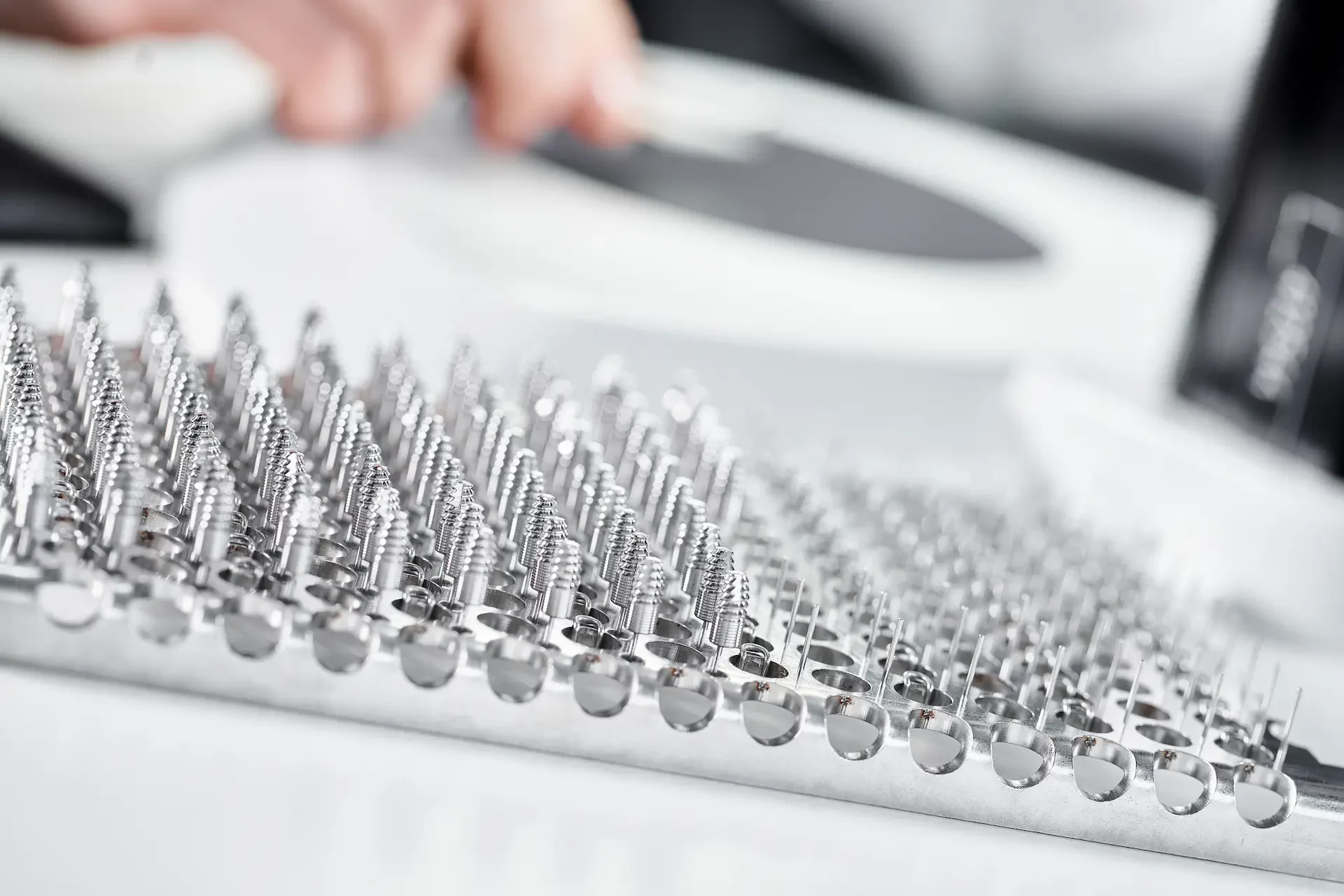
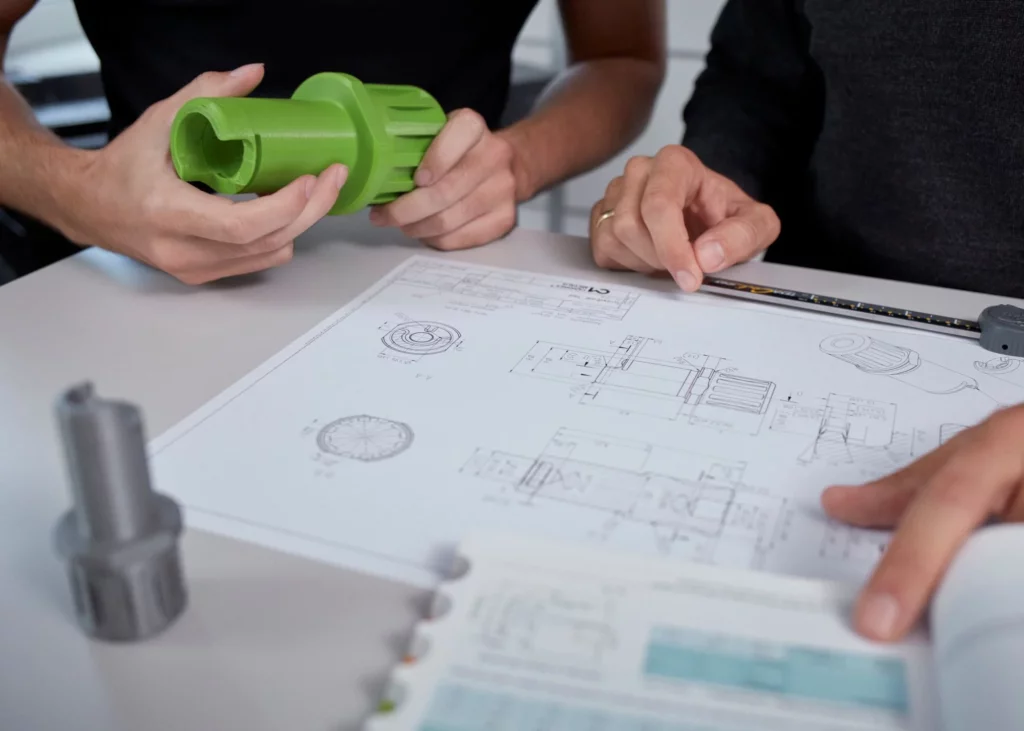
Because biocompatibility is decided on the finished part, the way a component is produced carries real weight. Material expertise, precise machining, controlled surface treatment and clean final assembly all work toward the same goal: a part whose surface and chemistry match what the device maker validated.
At CMSA, we machine titanium, stainless steel, MP35N and precious-metal alloys for medical applications, apply surface treatments tailored to corrosion resistance and durability, and assemble in cleanroom conditions. Our work runs under an ISO 13485 quality management system, and our accredited ISO/IEC 17025 laboratory supports material and analytical control. The biological evaluation of the device remains with its manufacturer; our role is to deliver parts that keep the material’s promise intact.
Working on a new implantable or active device? Talk to our MedTech team about material choice early, when it is still easy to design for manufacturability.
Meet us in the US this October
Want to discuss material choices for your next device in person? Our team will be in the US for two MedTech events:
- American Medical Device Summit, October 26-27, 2026, Schaumburg (Chicago area). An invitation-only executive summit: contact us to arrange a meeting on site.
- MD&M Midwest, October 28-29, 2026, Minneapolis Convention Center, Booth 2812. Stop by to meet Sally and the team.
Share